Steps from Idea to Invention
Sunday November 10th 2024
Someone might ask, "How do you go about inventing something?"
Well, it all starts with the idea that you can see clearly in your minds eye. If you don't have that, then you need to think and visualize some more. Get out some paper and start doodling to help the visual process, but don't rush it.
Ok, I Got It, Now What?
So you got pretty good idea on what it looks like and how it works. Good! That's important! It's now good idea to get a friend so that you can bounce ideas off them and refine it, and they'll help you figure out the details. But you are the one to take the lead and keep everyone in focus... but...
Let me explain from experience
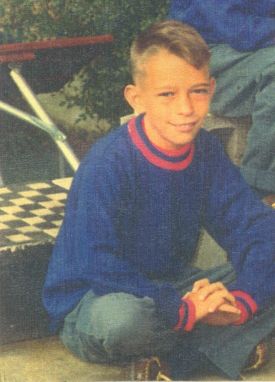 I was about 10 years old in Hamilton Ontario when I came up with many ideas. One of those ideas was '3D Checkers'.
Although my Dad shot it full of holes and said it would not work (He shot all my ideas down!), I never forgot the idea and how it would work.
Then many years later, while living in Parksville (1989) on Vancouver Island, the details of one of those ideas got written down.
I was about 10 years old in Hamilton Ontario when I came up with many ideas. One of those ideas was '3D Checkers'.
Although my Dad shot it full of holes and said it would not work (He shot all my ideas down!), I never forgot the idea and how it would work.
Then many years later, while living in Parksville (1989) on Vancouver Island, the details of one of those ideas got written down.
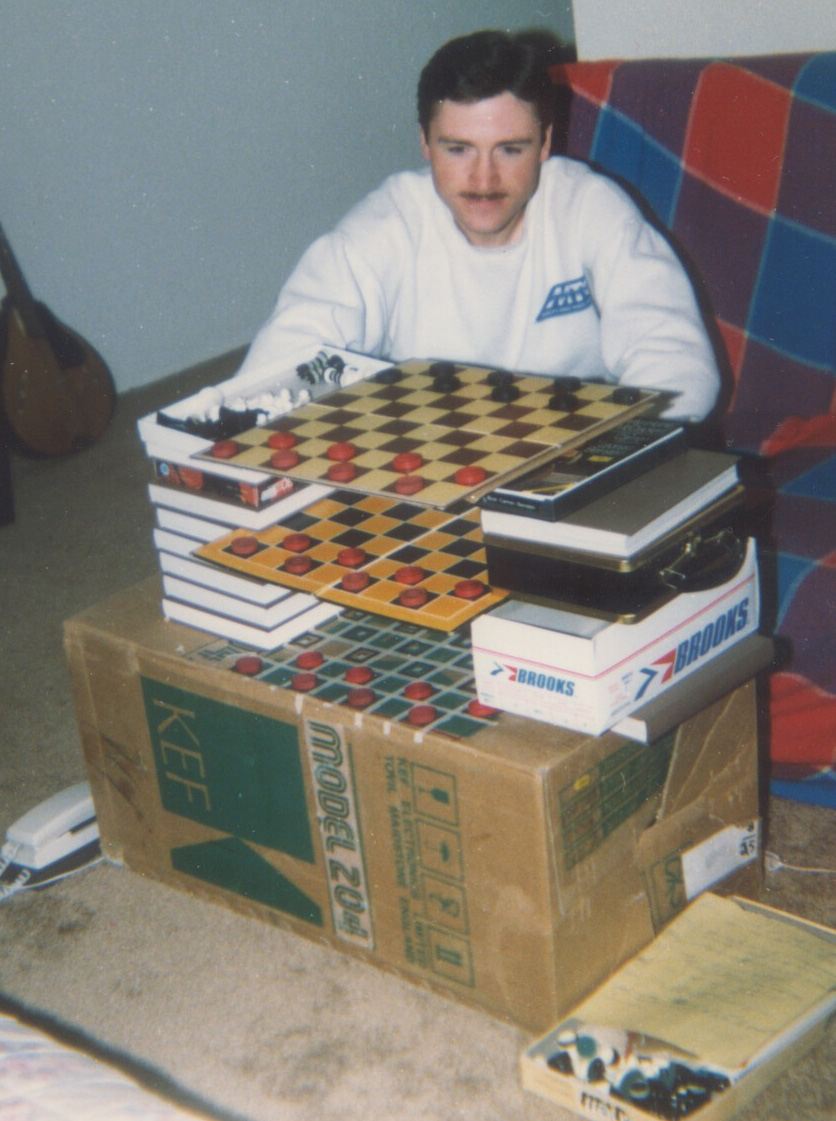
 Gary McBrine & I got tired of playing chess and were looking for another game. Perhaps something like what was seen in StarTrek.
So I dared myself to say: “We could play: '3D Checkers'”? (the idea I came up with many years ago). Gary loved the idea. That night I put it together.
The next morning I called out to Gary: "It's your move Gary". He was quite happy to have a game.
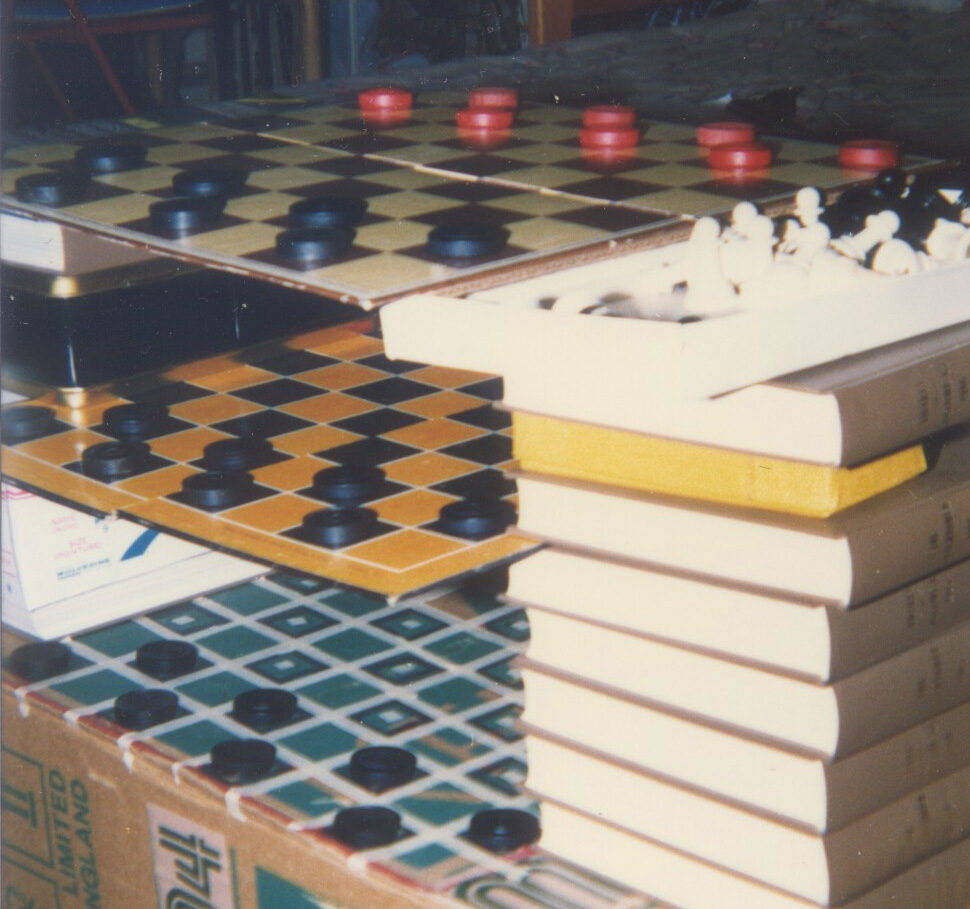
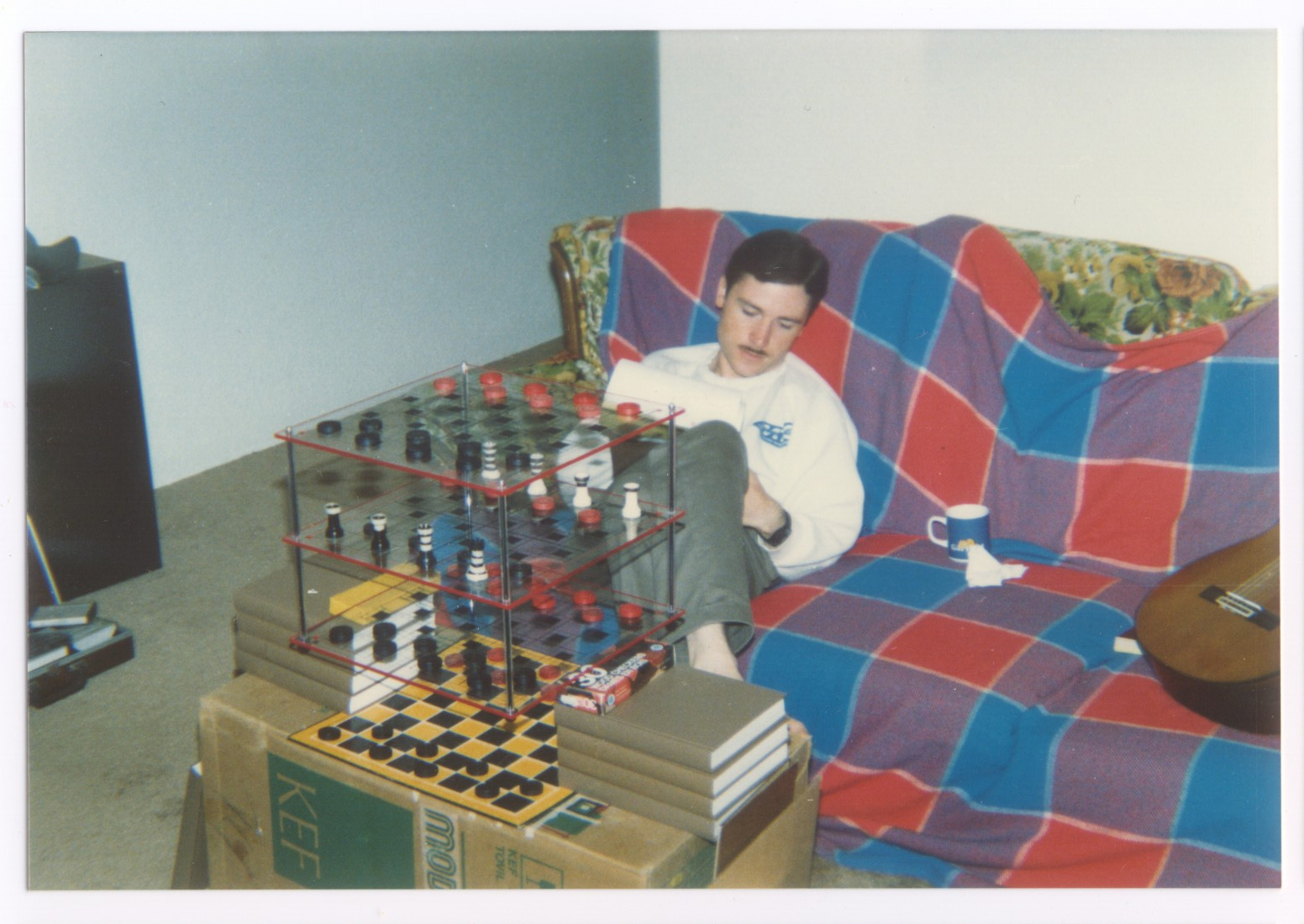
The game started out by using books, bound volumes and cardboard boxes supporting the different board levels. We only had two checker boards so
(thinking outside the box) came up with the idea to use tape on a cardboard box (as seen in the photo) for the 3rd board. The game really worked and was fun to play.
I had to reinvent the game board that it was played on because it was hard to see through cardboard.
Gary McBrine & I got tired of playing chess and were looking for another game. Perhaps something like what was seen in StarTrek.
So I dared myself to say: “We could play: '3D Checkers'”? (the idea I came up with many years ago). Gary loved the idea. That night I put it together.
The next morning I called out to Gary: "It's your move Gary". He was quite happy to have a game.
The game started out by using books, bound volumes and cardboard boxes supporting the different board levels. We only had two checker boards so
(thinking outside the box) came up with the idea to use tape on a cardboard box (as seen in the photo) for the 3rd board. The game really worked and was fun to play.
I had to reinvent the game board that it was played on because it was hard to see through cardboard.
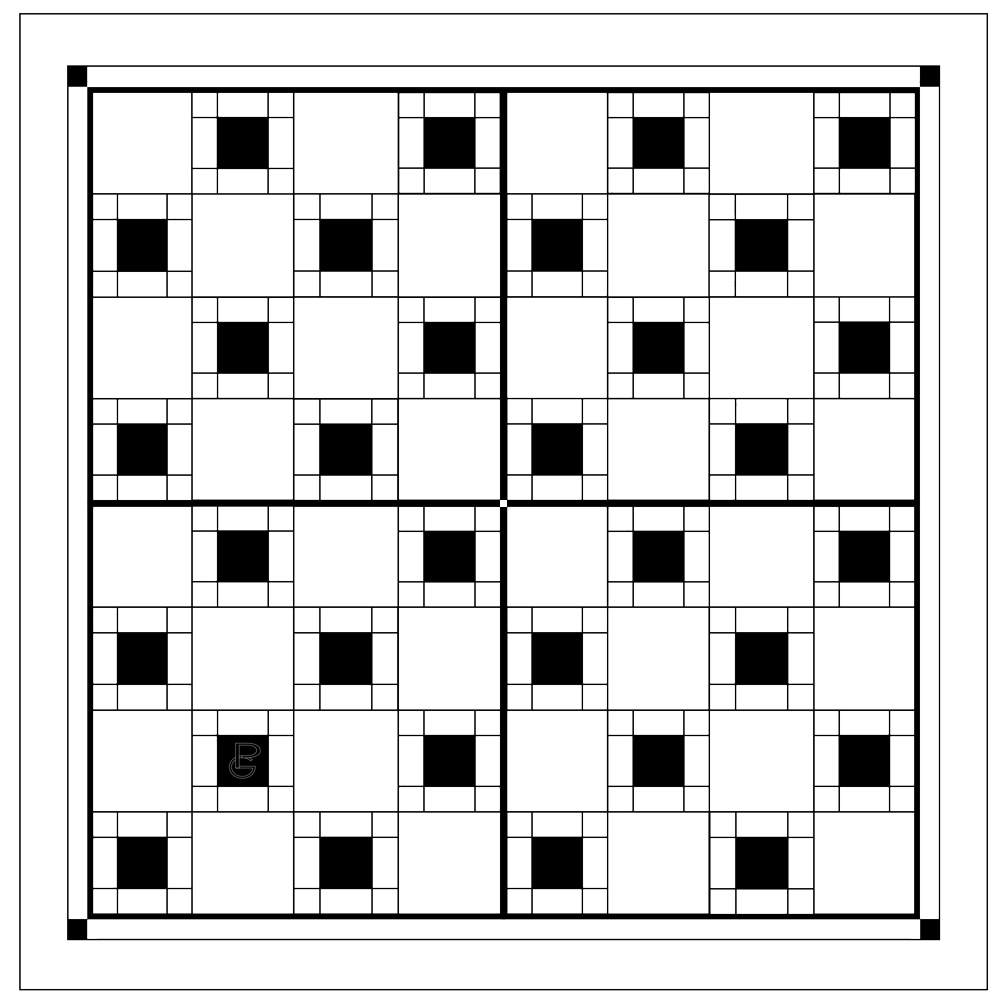 Harder still was not knowing where the center of the board was when transferring your piece from one board level to another.
So I divided it into quarters as it's easier to see 4x4 than 8x8 squares. The result is, less than 1/8 is black & more than 7/8 is clear.
Harder still was not knowing where the center of the board was when transferring your piece from one board level to another.
So I divided it into quarters as it's easier to see 4x4 than 8x8 squares. The result is, less than 1/8 is black & more than 7/8 is clear.
 A friend of ours came over and tried it and like it very much. Later he said if I was not going to copyright it, he was. Well, first we had to write down all the rules.
So the 3 of us started figuring out how to say, what to say. Gary was later called 'The Word Man' and I was called 'The Idea Man' and there he was,
busily writing it all down. I drew the pictures and built the game. Gary started writing down the details as we played the game and
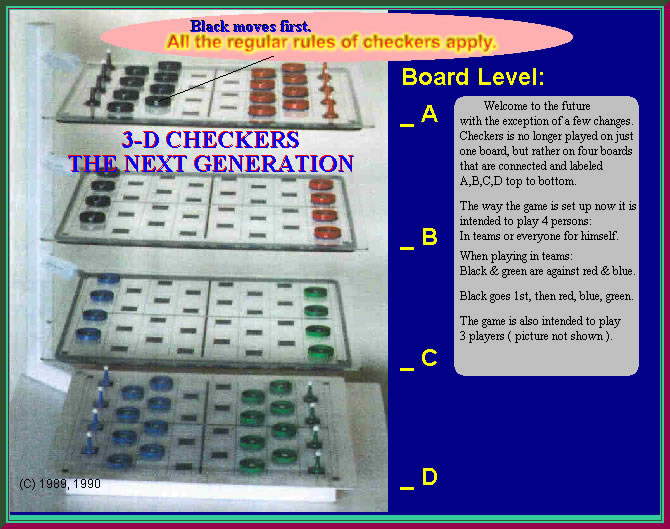
tried to figure out the right words to describe how to play the game. The game went from 3 levels to 4 levels to resolve issues
involving a single middle board. Gary didn't like that, but I knew (just like in tic-tac-toe the middle square) the middle board was a problem.
At that time, I also knew the concept had to work for chess as well.
A friend of ours came over and tried it and like it very much. Later he said if I was not going to copyright it, he was. Well, first we had to write down all the rules.
So the 3 of us started figuring out how to say, what to say. Gary was later called 'The Word Man' and I was called 'The Idea Man' and there he was,
busily writing it all down. I drew the pictures and built the game. Gary started writing down the details as we played the game and
tried to figure out the right words to describe how to play the game. The game went from 3 levels to 4 levels to resolve issues
involving a single middle board. Gary didn't like that, but I knew (just like in tic-tac-toe the middle square) the middle board was a problem.
At that time, I also knew the concept had to work for chess as well.
Improvement by simplification
We kept playing the game to resolve other issues and speed up the time to play the game.
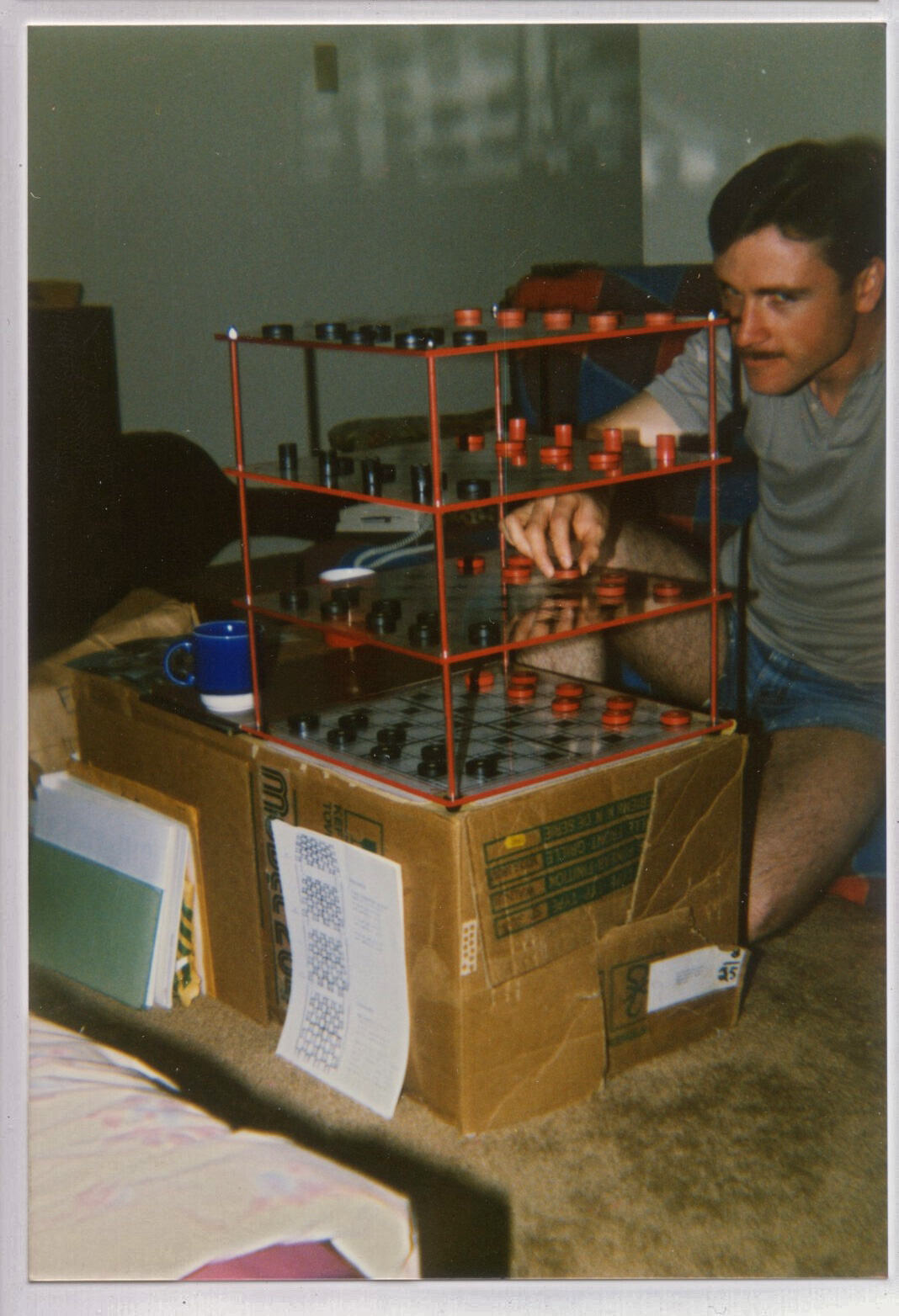 That's when the Prototype was finished and we figured out how to speed up the game. We had to add a new piece called a Prince and
as pieces started to disappear (as they do in Checkers) the ability to close down board levels which really did speed up the end game.
During all of this time we were researching how to copyright the game (which was 1st done in Canada 1989) but later in Washington DC
for international copyright.
That's when the Prototype was finished and we figured out how to speed up the game. We had to add a new piece called a Prince and
as pieces started to disappear (as they do in Checkers) the ability to close down board levels which really did speed up the end game.
During all of this time we were researching how to copyright the game (which was 1st done in Canada 1989) but later in Washington DC
for international copyright.
Moving - and the game was on hold
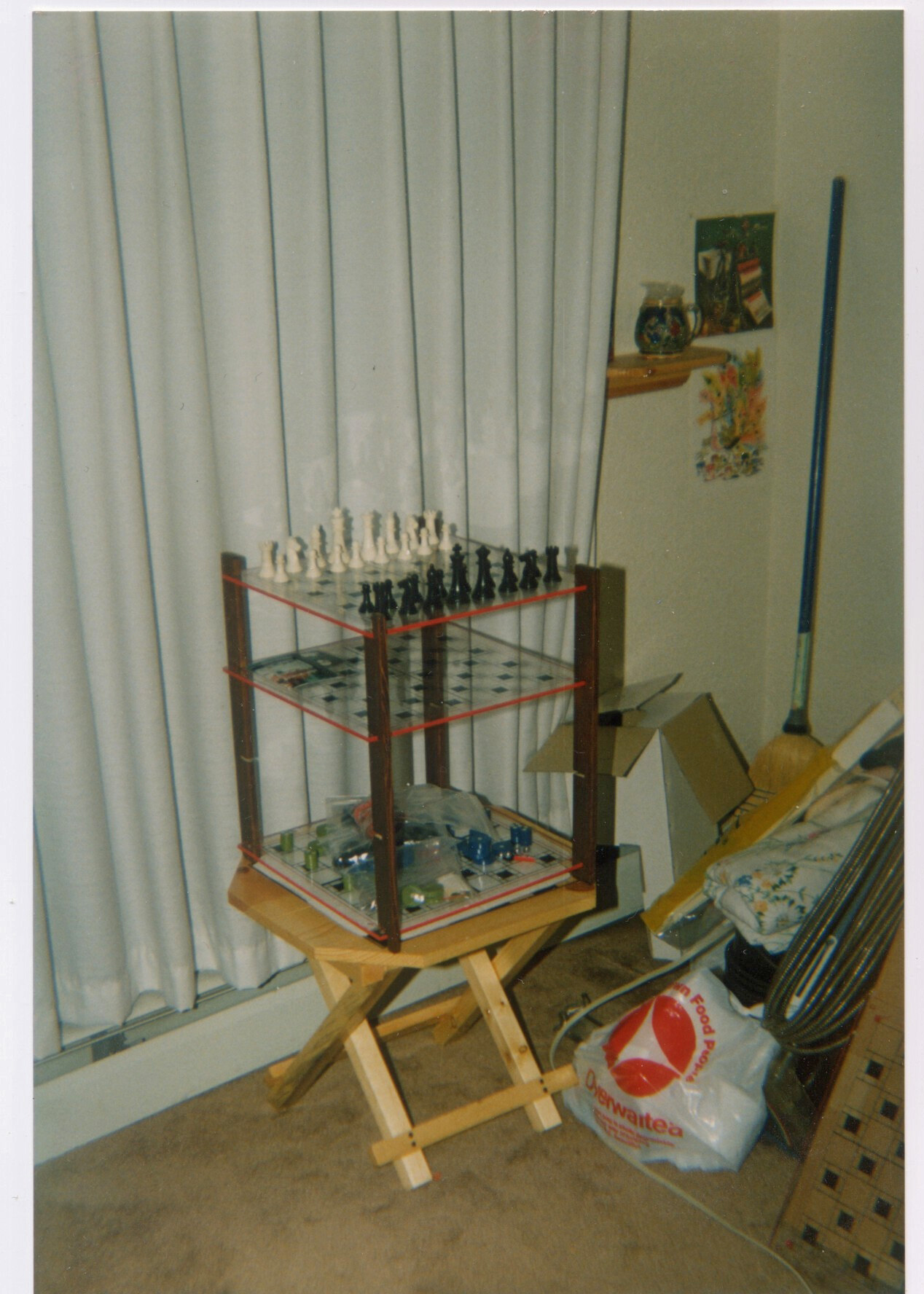 That same year (1989) I was moving to Victoria to get a better job. But as I was leaving and everything almost packed.
I had an idea on how to play Chess in 3D.
So I quickly put it together (as seen in the picture here) and tried it out. It seemed to work! But I had to get going. I was moving! Right.
Ok, so later I would figure it out.
That same year (1989) I was moving to Victoria to get a better job. But as I was leaving and everything almost packed.
I had an idea on how to play Chess in 3D.
So I quickly put it together (as seen in the picture here) and tried it out. It seemed to work! But I had to get going. I was moving! Right.
Ok, so later I would figure it out.
3D Chess
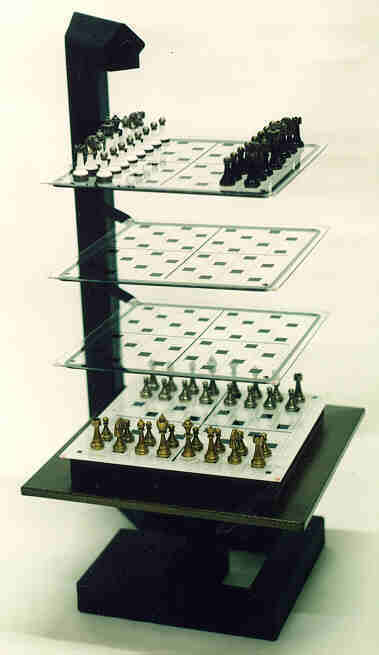 I now knew enough from the experience of the previous game that I could figure it out for 3D Chess.
I had the game put together very quickly (with all the rules) on 2 boards but thought it was too simple to be right.
So with some time I came up with what you see here and called it: "Chess - Future Generation".
It was meant for 2 players to play 2 colors or 4 players to play in teams. White & Gold vs Black & Silver.
I now knew enough from the experience of the previous game that I could figure it out for 3D Chess.
I had the game put together very quickly (with all the rules) on 2 boards but thought it was too simple to be right.
So with some time I came up with what you see here and called it: "Chess - Future Generation".
It was meant for 2 players to play 2 colors or 4 players to play in teams. White & Gold vs Black & Silver.
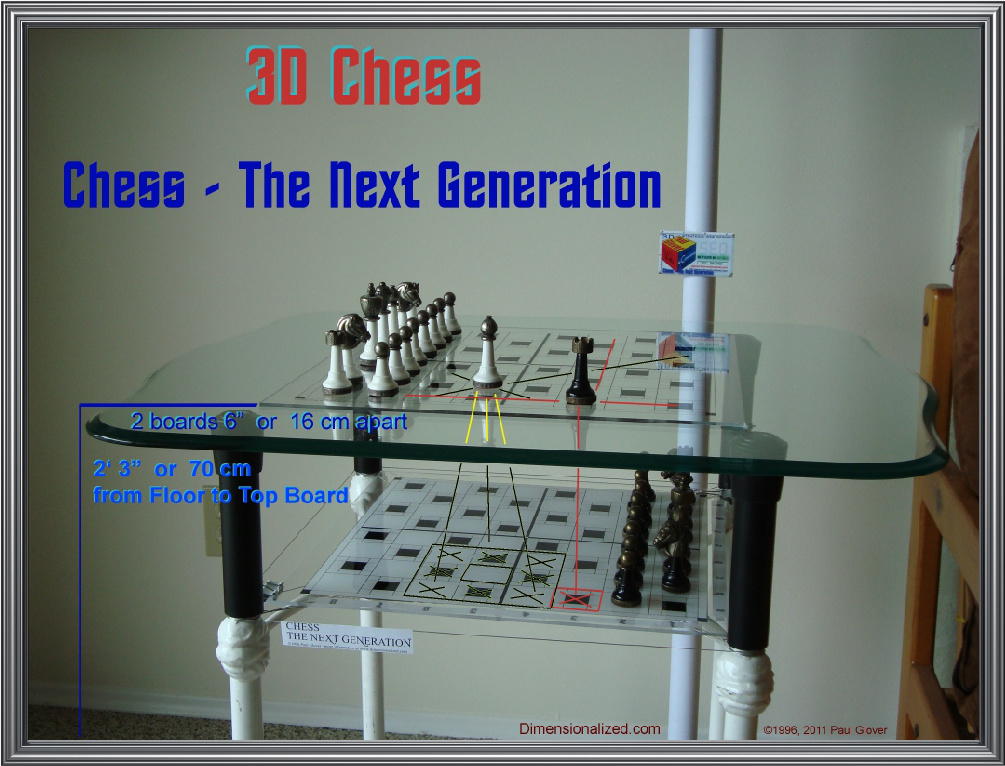 After playing the game (Chess - The Future Generation) a few times I realized that my first version on two levels was the better version
(back in Parksville) and the game took the same amount of time to play as regular 2D chess. So I called this game: "Chess - The Next Generation"
After playing the game (Chess - The Future Generation) a few times I realized that my first version on two levels was the better version
(back in Parksville) and the game took the same amount of time to play as regular 2D chess. So I called this game: "Chess - The Next Generation"
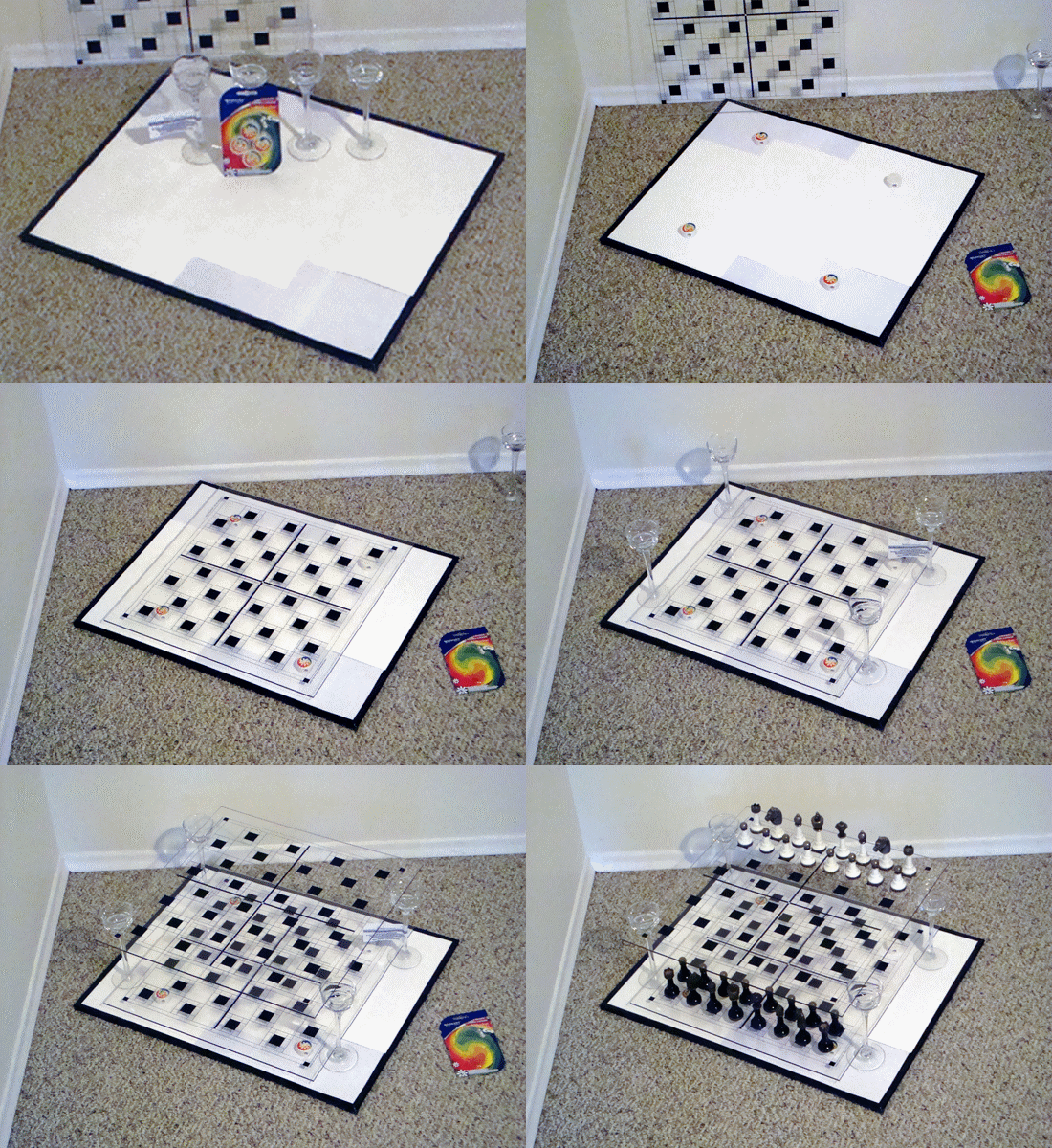 But even still later I was helped to realize that there was a flaw in the game if both black & white were on the same board level.
So immediately I changed it so that White got to choose which board level he was going to start on and Black took the other level as seen
in the picture above. I also wanted to make it easy for anyone to play the game. So the idea came to me as seen in the picture on the right.
By using Tea Light or small wine glasses to support the 2nd board you could start playing right now (3D Chess rules).
But even still later I was helped to realize that there was a flaw in the game if both black & white were on the same board level.
So immediately I changed it so that White got to choose which board level he was going to start on and Black took the other level as seen
in the picture above. I also wanted to make it easy for anyone to play the game. So the idea came to me as seen in the picture on the right.
By using Tea Light or small wine glasses to support the 2nd board you could start playing right now (3D Chess rules).
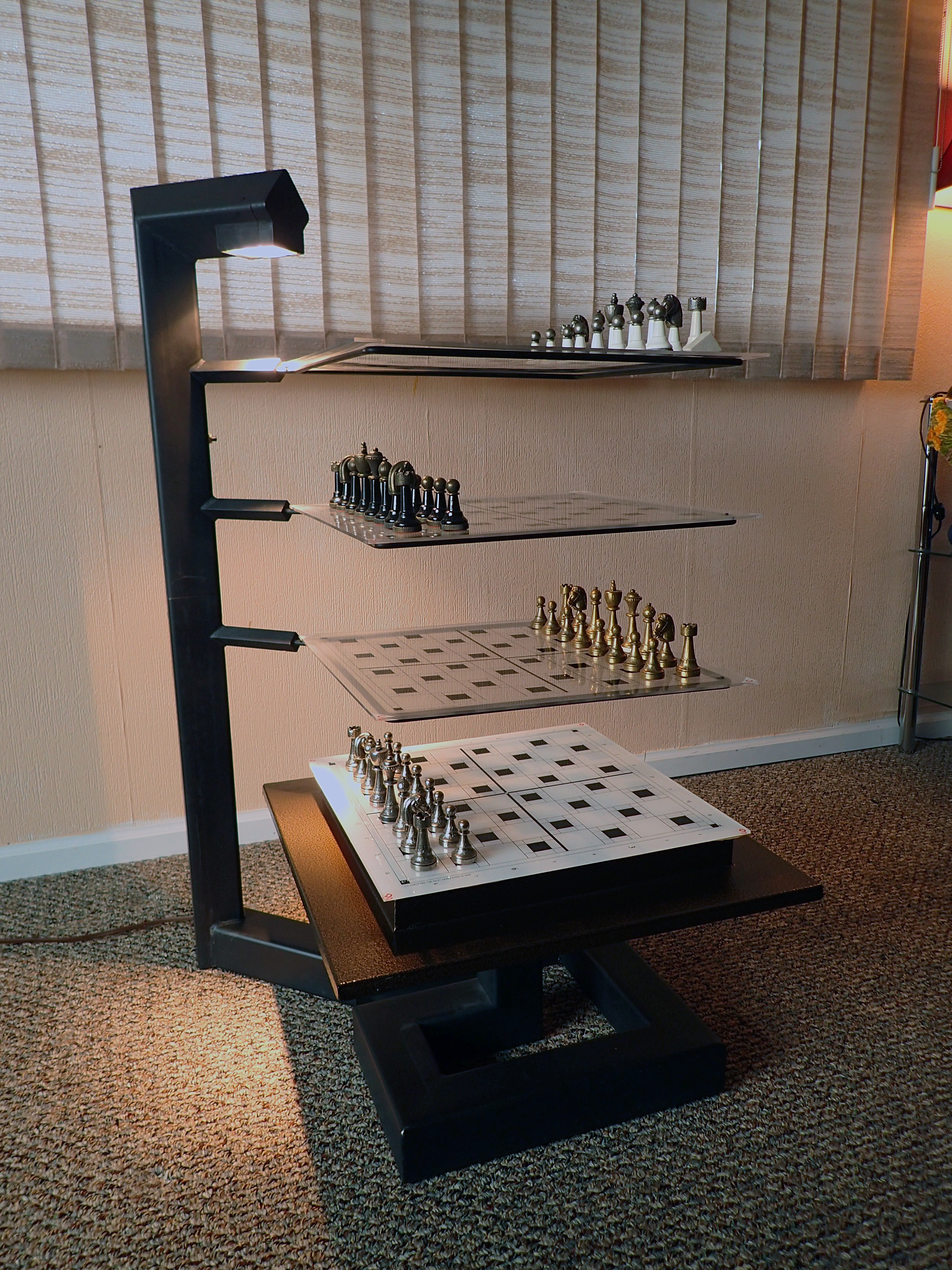 Recognizing the above fact, I changed how the Chess - Future Generation was set up to resolve anything I have not seen (Rules).
3D Shogi
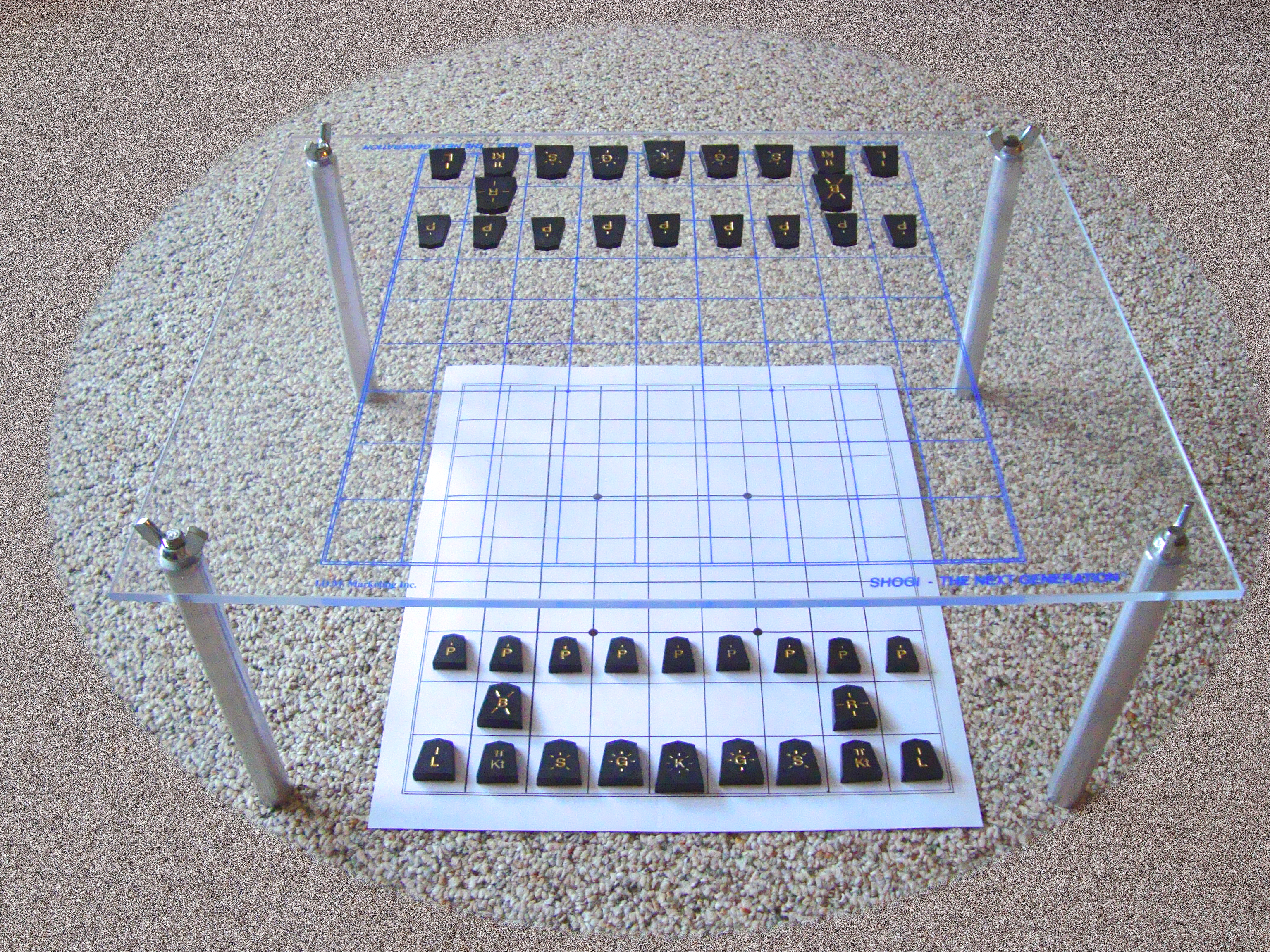 Before I could get copyright on "Chess - The Next Generation" a Japanese man found out about these games and wondered if the game that he plays,
Shogi, could be made into a 3D game. So in a matter of a few weeks after learning how to play the game and learning how to read the
Japanese characters for the pieces, I wrote it all down got it translated and sent away for copyright:
And that game came to be called: "Shogi - The Next Generation" (Rules to play).
Before I could get copyright on "Chess - The Next Generation" a Japanese man found out about these games and wondered if the game that he plays,
Shogi, could be made into a 3D game. So in a matter of a few weeks after learning how to play the game and learning how to read the
Japanese characters for the pieces, I wrote it all down got it translated and sent away for copyright:
And that game came to be called: "Shogi - The Next Generation" (Rules to play).
Then after some time...
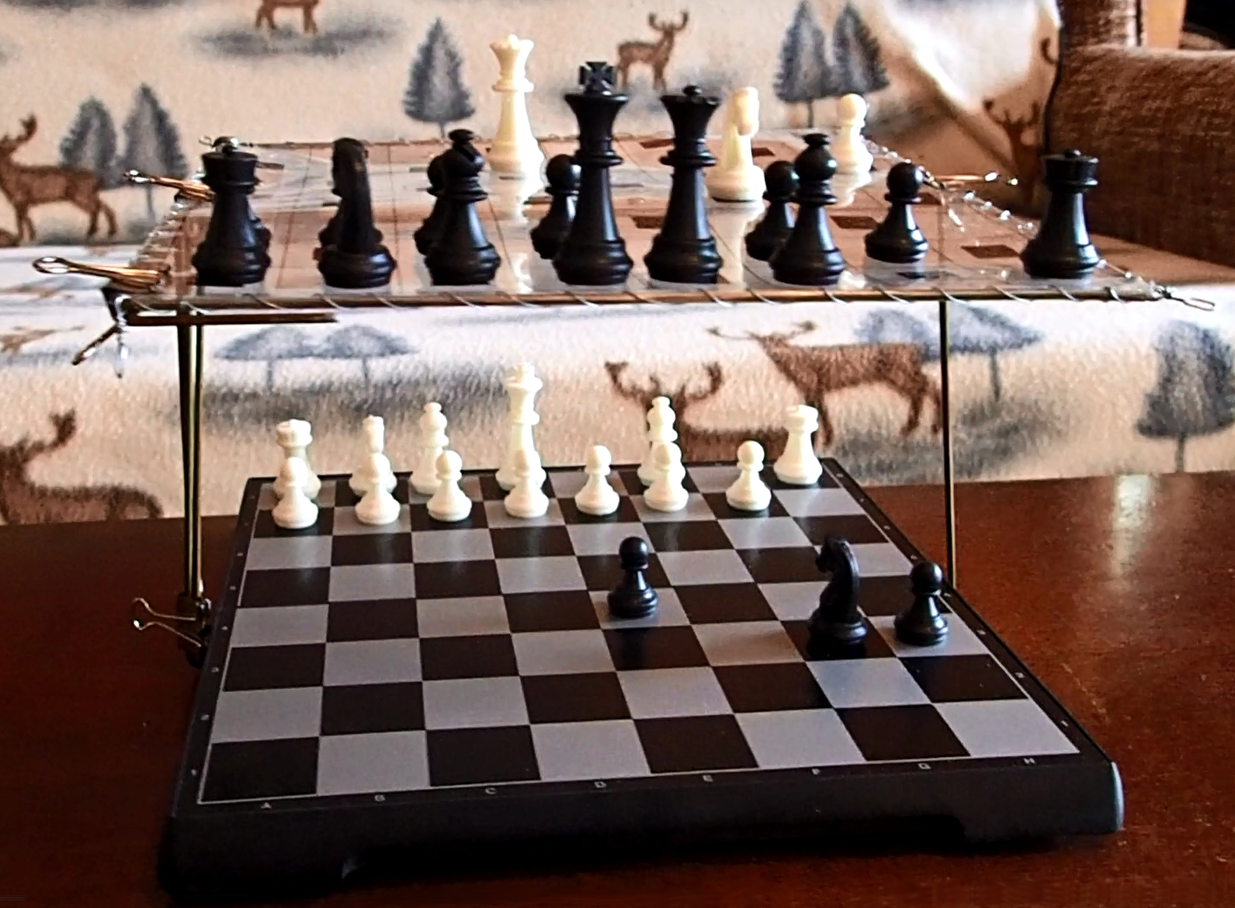 I made a portable magnetic version...
So do you see what's happening?
The idea, if it's good, becomes better (more refined) and can be transferred to other things. And that's the process about bringing an Idea to Invention! And,.. That process, once learned, can be repeated with many other things (the pictures +info).
Here are the Dates to the international copyrights
In the future, when there is no money but all are contributing to the welfare of everyone, we will only need a signature and date to when the work was completed so that others who have questions concerning the product can get in contact with that person or persons. After all, that's what Jehovah has done. His signature is on everything and we are made in his image.